
What Is 6068 Aluminium Sheet 6061 T6?
When buyers search for 6068 aluminium sheet 6061 T6, they are looking at two high-performance aluminum alloys. Both belong to the 6000 series aluminum family. Both use magnesium and silicon as main alloying elements. But they serve different purposes and offer different performance levels.
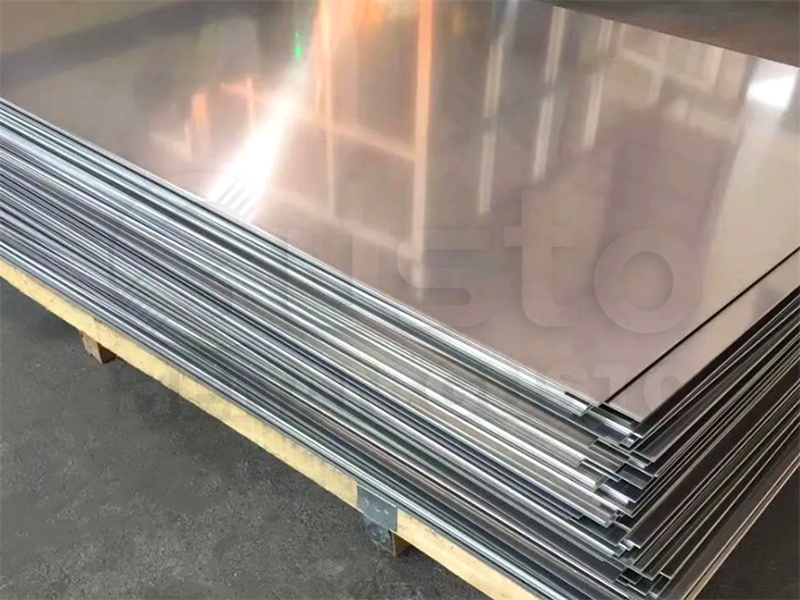
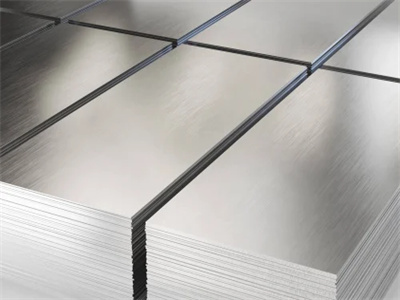
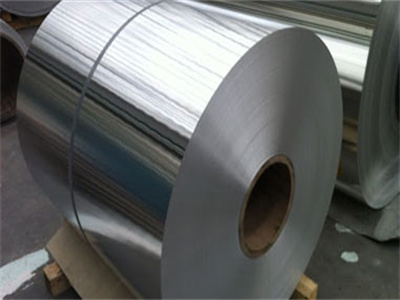
6061 T6 is the most widely used structural aluminum alloy in the world. It offers a great balance of strength, workability, and corrosion resistance. The T6 temper means the alloy went through solution heat treatment and artificial aging. This process maximizes its strength.
6068 aluminum is a newer, higher-strength alloy. It delivers better mechanical properties than 6061 in many areas. It competes directly with 7075 in some applications while remaining easier to weld and form.
Understanding both alloys helps buyers make the right choice for their project.
What Is the 6061 T6 Aluminum Alloy?
6061 T6 aluminum is a heat-treatable alloy. It belongs to the aluminum-magnesium-silicon group. The “6061” refers to the alloy composition. The “T6” refers to the temper condition.
Chemical Composition of 6061 T6
| Element | Content (%) |
|---|---|
| Aluminum (Al) | Balance |
| Magnesium (Mg) | 0.80 – 1.20 |
| Silicon (Si) | 0.40 – 0.80 |
| Copper (Cu) | 0.15 – 0.40 |
| Chromium (Cr) | 0.04 – 0.35 |
| Iron (Fe) | Max 0.70 |
| Manganese (Mn) | Max 0.15 |
| Zinc (Zn) | Max 0.25 |
| Titanium (Ti) | Max 0.15 |
This composition gives 6061 T6 its excellent combination of strength and corrosion resistance.
6061 T6 Aluminum Properties PDF — Key Data
Many buyers search for aluminium 6061 T6 properties PDF to find official data. Here are the key mechanical and physical properties you need.
Mechanical Properties of 6061 T6
| Property | Value |
|---|---|
| Ultimate Tensile Strength | 310 MPa (45,000 psi) |
| Yield Strength (0.2% offset) | 276 MPa (40,000 psi) |
| Elongation at Break | 12% |
| Hardness (Brinell) | 95 HB |
| Shear Strength | 207 MPa |
| Fatigue Strength | 97 MPa |
| Elastic Modulus | 68.9 GPa |
Physical Properties of 6061 T6
| Property | Value |
|---|---|
| Density | 2.70 g/cm³ |
| Melting Point | 582 – 652°C |
| Thermal Conductivity | 167 W/m·K |
| Electrical Conductivity | 43% IACS |
| Coefficient of Thermal Expansion | 23.6 µm/m·°C |
These properties make 6061 T6 aluminum sheet suitable for structural, aerospace, and industrial applications.
What Is the Difference Between Aluminium 6061 and 6061 T6?
This is one of the most common questions buyers ask.
6061 refers to the alloy grade only. It describes the chemical composition of the aluminum.
6061 T6 refers to both the alloy grade AND the temper condition. The T6 temper involves two steps:
- Solution heat treatment — Heat the alloy to around 530°C, then quench rapidly in water.
- Artificial aging — Heat again to around 160°C for 8–10 hours.
This process increases the strength significantly compared to non-heat-treated 6061.
Comparison: 6061 vs 6061 T6
| Property | 6061-O (Annealed) | 6061-T6 |
|---|---|---|
| Tensile Strength | 124 MPa | 310 MPa |
| Yield Strength | 55 MPa | 276 MPa |
| Hardness | 30 HB | 95 HB |
| Elongation | 25% | 12% |
The T6 temper more than doubles the strength. This is why most structural applications specify 6061 T6 specifically.
6061 T6 Plate — Sizes and Specifications
6061 T6 plate is available in a wide range of sizes. Buyers can choose standard sizes or request custom cutting.
Standard Thickness Range
- Sheet: 0.5mm – 6.0mm
- Plate: 6.0mm – 200mm
Standard Width and Length
- Width: 1000mm, 1219mm (48″), 1500mm, 2000mm
- Length: 2000mm, 2438mm (96″), 3000mm, 6000mm
Common Cut-to-Size Options
Many suppliers offer cut-to-size service. Buyers specify exact dimensions. The supplier cuts from standard plates and ships the exact pieces needed.
How Thick Is 6061 T6 Sheet?
For 6061 T6 sheet, standard thickness runs from 0.5mm to 6.0mm. Anything above 6.0mm is classified as plate. Thickness tolerances follow ASTM B209 standards. Typical tolerance is ±0.08mm to ±0.40mm depending on thickness and width.
6061 T6 ASTM — Standard Specifications
6061 T6 ASTM standards govern the quality and testing of aluminum sheet and plate. The most important standard is ASTM B209.
ASTM B209 Aluminum
ASTM B209 covers aluminum and aluminum-alloy sheet and plate. It specifies:
- Chemical composition limits
- Mechanical property requirements
- Dimensional tolerances
- Testing methods
- Marking and certification requirements
Any buyer purchasing 6061 T6 plate for structural or aerospace use should require ASTM B209 certification from their supplier. This ensures the material meets all required standards.
Other Relevant Standards
| Standard | Description |
|---|---|
| ASTM B209 | Sheet and plate |
| AMS 2770 | Heat treatment |
| AMS 4027 | Plate specification |
| EN 573-3 | European equivalent |
| ISO 6361 | International sheet standard |
Always ask your supplier for a Mill Test Certificate (MTC) that references these standards.
Aluminum 6061 T6 Price Per Kg
Aluminum 6061 T6 price per kg varies based on several factors. Buyers should understand what drives pricing before requesting quotes.
Factors That Affect 6061 T6 Price
1. Raw Material Cost
Aluminum prices follow the London Metal Exchange (LME). When LME aluminum prices rise, 6061 T6 prices follow.
2. Alloy Premium
6061 T6 costs more than pure aluminum or lower-grade alloys. The heat treatment process adds cost.
3. Thickness
Thicker plates cost more per piece but sometimes less per kg due to rolling efficiency.
4. Size and Cutting
Standard sizes cost less. Cut-to-size adds processing cost.
5. Surface Finish
Mill finish is cheapest. Anodized or polished surfaces cost more.
6. Order Quantity
Larger orders get lower per-kg pricing. Small orders carry higher unit costs.
7. Certification Requirements
ASTM B209 certified material costs more than non-certified material.
Typical Price Range (Indicative Only)
| Product | Approximate Price Range |
|---|---|
| 6061 T6 Sheet (standard) | $3.5 – $6.0 per kg |
| 6061 T6 Plate (thick) | $4.0 – $7.0 per kg |
| 6061 T6 Cut-to-size | Add $0.5 – $1.5 per kg |
Note: Prices change with market conditions. Contact suppliers for current pricing.
What Is 6068 Aluminum?
6068 aluminum is a high-strength alloy in the 6000 series. It is relatively new compared to 6061. Manufacturers developed 6068 to achieve higher strength while keeping the good weldability and corrosion resistance typical of 6000 series alloys.
6068 Aluminum Chemical Composition
| Element | Content (%) |
|---|---|
| Aluminum (Al) | Balance |
| Magnesium (Mg) | 1.20 – 1.80 |
| Silicon (Si) | 0.70 – 1.30 |
| Copper (Cu) | 0.10 – 0.40 |
| Manganese (Mn) | 0.10 – 0.40 |
| Chromium (Cr) | 0.04 – 0.25 |
| Zinc (Zn) | Max 0.20 |
The higher magnesium and silicon content compared to 6061 gives 6068 its superior strength.
6068 Aluminum Strength — Key Properties
6068 aluminum strength is one of its biggest selling points.
Mechanical Properties of 6068 T6
| Property | Value |
|---|---|
| Ultimate Tensile Strength | 380 – 420 MPa |
| Yield Strength | 340 – 380 MPa |
| Elongation | 10 – 12% |
| Hardness (Brinell) | 110 – 120 HB |
Compared to 6061 T6, 6068 T6 offers approximately 25 – 35% higher tensile strength. This makes it suitable for more demanding structural applications.
6068 Aluminum vs 6061 — Full Comparison
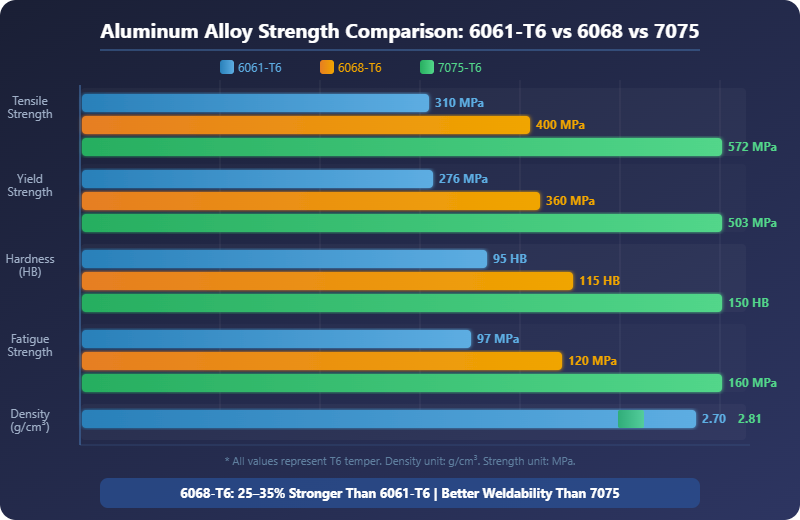
This is the question most buyers ask when evaluating both alloys. Here is a detailed comparison.
Strength Comparison
| Property | 6061 T6 | 6068 T6 |
|---|---|---|
| Tensile Strength | 310 MPa | 400 MPa |
| Yield Strength | 276 MPa | 360 MPa |
| Hardness | 95 HB | 115 HB |
| Fatigue Strength | 97 MPa | 120 MPa |
Winner: 6068 — Significantly stronger in all mechanical properties.
Weldability
Both alloys weld well using TIG and MIG processes. 6068 maintains slightly better strength in the weld zone after aging. Winner: Tie (both good, 6068 slightly better post-weld strength recovery)
Corrosion Resistance
Both offer good corrosion resistance. 6061 has a longer track record in marine and outdoor environments. Winner: 6061 (more data available, slightly better known performance)
Machinability
6061 T6 is known for excellent machinability. 6068 is also machinable but slightly harder. Winner: 6061 (marginally easier to machine)
Cost
6061 is more widely produced and more affordable. 6068 carries a premium price due to higher alloy content and less widespread production. Winner: 6061 (lower cost)
Availability
6061 T6 is available from suppliers worldwide in all forms and sizes. 6068 has more limited availability. Winner: 6061 (much easier to source)
When to Choose Each Alloy
Choose 6061 T6 when:
- Budget is a key factor
- Wide availability matters
- Standard structural applications
- Marine or outdoor environments
- Machined components
Choose 6068 when:
- Maximum strength is critical
- Weight reduction is important
- Automotive or performance applications
- Higher load-bearing requirements
6068 Aluminum vs 7075 — Which Is Stronger?
Some buyers compare 6068 aluminum vs 7075 when selecting high-strength alloys.
Side-by-Side Comparison
| Property | 6068 T6 | 7075 T6 |
|---|---|---|
| Tensile Strength | ~400 MPa | ~572 MPa |
| Yield Strength | ~360 MPa | ~503 MPa |
| Density | 2.70 g/cm³ | 2.81 g/cm³ |
| Weldability | Good | Poor |
| Corrosion Resistance | Good | Fair |
| Cost | Medium | High |
| Machinability | Good | Good |
7075 is stronger. It is one of the strongest aluminum alloys available. But 7075 has major disadvantages:
- Poor weldability — 7075 cannot be easily welded without significant strength loss
- Lower corrosion resistance — Needs anodizing or coating for outdoor use
- Higher cost — 7075 costs significantly more per kg
- Stress corrosion cracking — More susceptible than 6000 series alloys
6068 is the better choice when you need high strength but also require good weldability and corrosion resistance. Applications like automotive frames, bicycle components, and structural parts often prefer 6068 over 7075 for these reasons.
Is 6068 Aluminum Good?
Yes. 6068 aluminum is an excellent alloy for demanding applications. Here is a summary of why:
✅ High strength — Among the strongest 6000 series alloys available
✅ Good weldability — Can be welded without special precautions
✅ Corrosion resistant — Performs well in most environments
✅ Good fatigue resistance — Handles cyclic loading well
✅ Lighter than steel — About 65% lighter than carbon steel at similar strength
✅ Recyclable — Fully recyclable with no property loss
The main limitations are higher cost and lower availability compared to 6061. For applications where strength is the priority and cost is secondary, 6068 is an excellent choice.
6061 T6 Aluminum Sheet Specifications
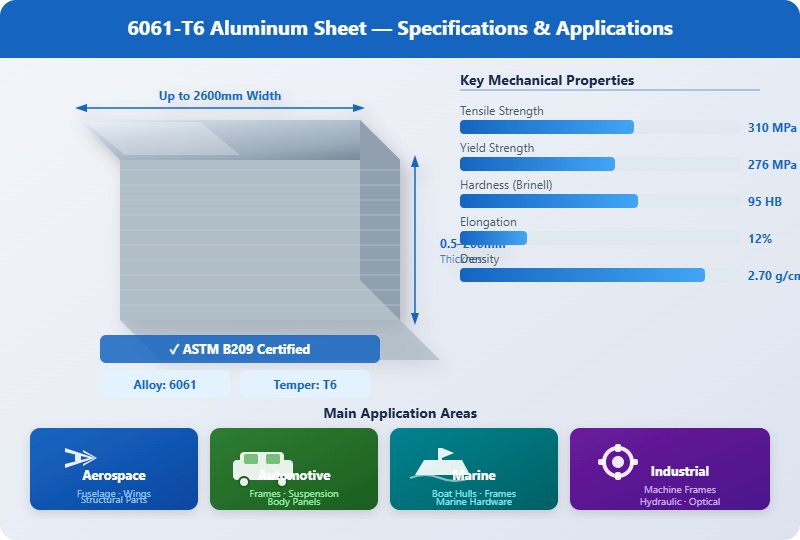
Here is a complete specification summary for 6061 T6 aluminum sheet.
Product Overview
| Parameter | Details |
|---|---|
| Alloy | 6061 |
| Temper | T6 |
| Standard | ASTM B209, AMS 4027 |
| Thickness | 0.5mm – 200mm |
| Width | Up to 2600mm |
| Length | Up to 12000mm |
| Surface | Mill finish, anodized, brushed |
Mechanical Properties Summary
| Property | Minimum Value |
|---|---|
| Tensile Strength | 290 MPa |
| Yield Strength | 240 MPa |
| Elongation | 8% |
| Hardness | 85 HB minimum |
Tolerances (ASTM B209)
| Thickness | Tolerance |
|---|---|
| 0.5 – 1.0mm | ±0.08mm |
| 1.0 – 2.0mm | ±0.10mm |
| 2.0 – 4.0mm | ±0.13mm |
| 4.0 – 6.0mm | ±0.15mm |
| 6.0mm and above | ±0.40mm |
6061 T6 Aluminum Sheet Suppliers — What to Look For
Finding reliable 6061 T6 aluminum sheet suppliers requires careful evaluation. Here are the key criteria:
1. Certifications
Look for suppliers with:
- ISO 9001 quality management certification
- ASTM B209 mill test certificates
- RoHS compliance documentation
2. Production Capacity
Reliable suppliers maintain large stock. They can handle both small and large orders without long delays.
3. Technical Support
Good suppliers help you verify specifications, select the right temper, and solve technical questions.
4. Quality Control
Ask about their quality testing process. Good suppliers test tensile strength, hardness, and chemical composition for every batch.
5. Export Experience
For international buyers, choose suppliers with experience exporting to your region. They understand local import requirements and documentation needs.
6. Sample Availability
Reputable suppliers offer samples before large orders. This lets you verify quality before committing.
Common Applications of 6061 T6 and 6068 Aluminum Sheet
6061 T6 Applications
Aerospace:
- Aircraft structural components
- Fuselage frames
- Wing ribs and spars
Transportation:
- Truck and trailer frames
- Rail car bodies
- Automotive parts
Marine:
- Boat hulls and frames
- Marine hardware
- Dock components
Construction:
- Structural beams and columns
- Bridge components
- Curtain wall systems
Industrial:
- Machine frames
- Hydraulic pistons
- Optical equipment
Consumer Products:
- Bicycle frames
- Sporting equipment
- Camera components
6068 Aluminum Applications
Automotive:
- High-performance vehicle frames
- Suspension components
- Crash management systems
Defense:
- Military hardware
- Armored vehicle components
Sports and Recreation:
- High-end bicycle frames
- Performance sporting goods
Structural:
- High-load bearing components
- Lightweight structural systems
Aluminum Sheet 6063 vs 6061 T6 — Brief Comparison
Some buyers also compare aluminum sheet 6063 with 6061 T6. Here is a quick overview:
| Property | 6063 T6 | 6061 T6 |
|---|---|---|
| Tensile Strength | 207 MPa | 310 MPa |
| Yield Strength | 172 MPa | 276 MPa |
| Surface Finish | Excellent | Good |
| Extrudability | Excellent | Good |
| Cost | Lower | Medium |
| Main Use | Architectural extrusions | Structural plate and sheet |
6063 is better for architectural applications where appearance matters. 6061 T6 is better for structural applications where strength matters. They serve different markets and are rarely direct substitutes.
FAQ — Common Questions About 6061 T6 and 6068 Aluminum
What is the difference between aluminium 6061 and 6061 T6?
6061 refers to the alloy composition only. 6061 T6 adds the T6 temper — solution heat treatment plus artificial aging. The T6 temper roughly doubles the tensile strength compared to annealed 6061.
Is 6068 aluminum good?
Yes. 6068 aluminum offers excellent strength, good weldability, and solid corrosion resistance. It is one of the best high-strength options in the 6000 series aluminum family.
How thick is 6061 T6 sheet?
6061 T6 sheet thickness ranges from 0.5mm to 6.0mm. Above 6.0mm is classified as plate. Plate thickness can reach 200mm or more.
What is the 6061 T6 aluminum alloy?
6061 T6 is a heat-treatable aluminum alloy with magnesium and silicon as main alloying elements. It offers tensile strength of 310 MPa, yield strength of 276 MPa, and excellent corrosion resistance. It is the most widely used structural aluminum alloy worldwide.
What standard covers 6061 T6 aluminum sheet?
ASTM B209 is the primary standard for 6061 T6 aluminum sheet and plate. AMS 4027 covers aerospace-grade plate. Always request mill test certificates referencing these standards.
How does 6068 compare to 7075?
7075 is stronger than 6068 but has poor weldability and higher cost. 6068 offers a better balance of strength, weldability, and corrosion resistance for most structural applications.
Why Buy 6061 T6 and 6068 Aluminum Sheet from Us?
We are a professional aluminum sheet and plate supplier with years of export experience. Here is what we offer:
Product Range
- Alloys: 6061, 6068, 6063, 5052, 7075, and more
- Tempers: T6, T651, O, H112, and others
- Thickness: 0.5mm – 200mm
- Width: Up to 2600mm
- Length: Up to 12000mm
- Surface: Mill finish, anodized, brushed, polished
Quality Assurance
- ASTM B209 certified material
- ISO 9001 quality management system
- Full mill test certificates with every order
- Third-party inspection available (SGS, BV, TUV)
Services
- Cut-to-size available
- Custom alloy and temper combinations
- Sample orders welcome
- Technical consultation at no charge
Export Markets
We supply 6061 T6 aluminum sheet and 6068 aluminum to customers in:
- North America (USA, Canada, Mexico)
- Europe (Germany, Italy, France, Poland)
- Southeast Asia (Vietnam, Thailand, Indonesia)
- Middle East (UAE, Saudi Arabia, Turkey)
- South America (Brazil, Chile, Colombia)
Contact Us for 6061 T6 and 6068 Aluminum Sheet
Ready to order or need more information? Contact our team today.
We respond within 24 hours with pricing and availability.
Provide these details for a fast quote:
- Alloy grade (6061 T6 or 6068)
- Thickness required
- Width and length
- Quantity (kg or pieces)
- Surface finish
- Certification requirements
Our team will send you a competitive quote with full technical support.