

When an electrical engineer or procurement manager searches for a high-conductivity aluminum alloy that also delivers structural integrity, aluminum 6101 is the answer. It is the industry-standard alloy for electrical bus bars, overhead conductor bars, and high-voltage switchgear components — combining over 55% IACS electrical conductivity with enough strength to handle mechanical loads in power distribution systems.
This guide covers every technical detail a buyer or design engineer needs: aluminum 6101 material properties, full temper specifications (T6, T61, T63), a direct comparison of aluminum 6101 vs 6061, pricing factors, and what to check when evaluating 6101 aluminum suppliers for export orders.

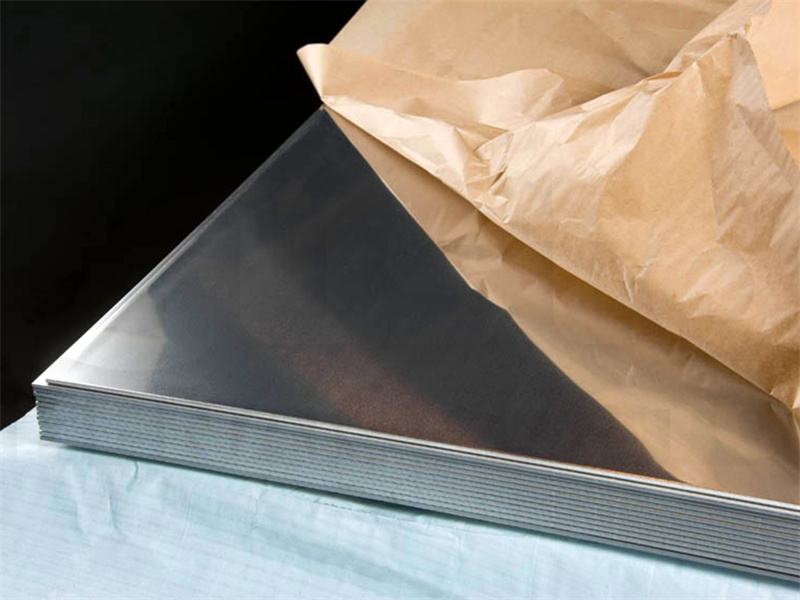
What Is Aluminum 6101?
Aluminum alloy 6101 is a wrought alloy in the 6xxx series — alloyed primarily with silicon (Si) and magnesium (Mg). It belongs to the same family as 6061 and 6063 but is specifically engineered for electrical applications. The alloy achieves the highest electrical conductivity in the 6xxx series by keeping copper, iron, and other resistivity-raising elements to strict minimums.
The key designation to understand: 6101 is registered primarily for use as electrical bus conductor bars, rod, and shapes. It is not a general-purpose structural alloy. Its design priority is conductivity first, strength second — the opposite of 6061.
Where Is 6101 Used?
- Electrical bus bars in switchgear, transformer terminals, and power distribution panels
- Overhead conductor bar for rail traction systems
- Grounding bars and neutral conductors in MV/LV electrical installations
- Bus duct systems (busway) in commercial and industrial buildings
- Battery interconnect bars in large-format energy storage systems
Aluminum 6101 Chemical Composition
The chemical composition of aluminum alloy 6101 is tightly controlled to maximize conductivity. Impurity elements — particularly copper and iron — directly raise electrical resistivity, so the alloy limits are set lower than in 6061.
| Element | Si | Fe | Cu | Mn | Mg | Cr | Zn | B | Al |
|---|---|---|---|---|---|---|---|---|---|
| 6101 wt% | 0.30–0.70 | ≤ 0.50 | ≤ 0.10 | ≤ 0.03 | 0.35–0.80 | ≤ 0.03 | ≤ 0.10 | 0.06 max | Balance |
| 6061 wt% (for comparison) | 0.40–0.80 | ≤ 0.70 | 0.15–0.40 | ≤ 0.15 | 0.80–1.20 | 0.04–0.35 | ≤ 0.25 | — | Balance |
Note the critical differences: 6101 allows only ≤ 0.10% Cu versus 6061’s 0.15–0.40% Cu. Copper is one of the strongest resistivity-raising solutes in aluminum. Keeping it below 0.10% is what enables 6101 to reach 55–59% IACS electrical conductivity.
Aluminum 6101 Material Properties — Full Data Table
The table below summarizes the key aluminum 6101 properties across the most common tempers. All values comply with ASTM B317 (bus conductor shapes) and ASTM B236 (bus conductor bars).
| Property | 6101-T6 | 6101-T61 | 6101-T63 | Unit |
|---|---|---|---|---|
| Tensile Strength (UTS) | 221 | 193 | 172 | MPa |
| Yield Strength (0.2% offset) | 193 | 172 | 152 | MPa |
| Elongation (2 in / 50 mm) | 8% | 10% | 12% | — |
| Electrical Conductivity | 55% IACS | 57% IACS | 59% IACS | % IACS |
| Electrical Resistivity | 31.4 | 30.3 | 29.3 | nΩ·m |
| Density | 2.70 | g/cm³ | ||
| Thermal Conductivity | 177 | 185 | 190 | W/m·K |
| Melting Range | 615–655 | °C | ||
| Hardness (Brinell) | ~71 | ~65 | ~60 | HB |
| Modulus of Elasticity | 69 | GPa | ||
Temper Guide: 6101-T6 vs T61 vs T63
The temper code controls the trade-off between strength and electrical conductivity. All three tempers use the same alloy; the difference is in the aging cycle applied after solution heat treatment.
| Temper | Aging Treatment | Strength Priority | Conductivity Priority | Best Application |
|---|---|---|---|---|
| T6 | Peak aged (maximum strength) | Highest (221 MPa UTS) | 55% IACS | Structural bus bars, heavy bus duct, rail contact bars |
| T61 | Controlled over-aged | Medium (193 MPa UTS) | 57% IACS | General-purpose electrical bus bar — most common export spec |
| T63 | Further over-aged | Lower (172 MPa UTS) | 59% IACS (highest) | High-conductivity bus bars, transformer terminals, battery interconnects |
Practical rule: If your application is current-carrying capacity limited (you need every percent of IACS), specify T63. If the bar also carries mechanical loads (vibration, thermal expansion forces, mounting stress), specify T6 or T61. Most switchgear manufacturers default to 6101-T61 as the balanced choice.
Aluminum 6101 Electrical Conductivity — Why It Matters
Aluminium 6101 electrical conductivity is measured as a percentage of IACS (International Annealed Copper Standard). Pure copper is 100% IACS. Pure aluminum is approximately 61% IACS. Most structural 6xxx alloys (6061, 6082) fall in the 40–43% IACS range because alloying elements raise resistivity.
6101 achieves 55–59% IACS — dramatically higher than 6061 — because its composition is optimized to keep resistivity-raising solutes at minimum. This makes it the only 6xxx alloy widely accepted as a copper bus bar substitute in power distribution.
Conductivity Comparison: 6101 vs Common Conductors
| Material | Conductivity (% IACS) | Density (g/cm³) | Tensile Strength | Cost vs Copper |
|---|---|---|---|---|
| Copper (ETP) | 100% | 8.96 | ~220 MPa | Baseline |
| Aluminum 1350 (EC grade) | 61% | 2.70 | ~85 MPa (O temper) | ~30–40% of copper |
| Aluminum 6101-T63 | 59% | 2.70 | 172 MPa | ~30–40% of copper |
| Aluminum 6101-T6 | 55% | 2.70 | 221 MPa | ~30–40% of copper |
| Aluminum 6061-T6 | 43% | 2.70 | 310 MPa | ~30–40% of copper |
| Aluminum 6063-T5 | 53% | 2.70 | 152 MPa | ~30–40% of copper |
Key takeaway: 6101 delivers near-EC-grade conductivity with roughly double the strength of 1350. That combination is what makes it the standard for engineered bus bar systems where pure EC aluminum would be too weak to self-support.
Aluminum 6101 Thermal Conductivity and Density
Thermal Conductivity
Aluminum 6101 thermal conductivity ranges from 177 W/m·K (T6) to 190 W/m·K (T63). This is relevant for bus bar applications because joule heating — the heat generated by current flow through a conductor — must be dissipated. Higher thermal conductivity means the bar runs cooler at a given current load, which extends insulation life and reduces thermal derating requirements.
By comparison, 6061-T6 has a thermal conductivity of approximately 167 W/m·K. The 6101 advantage is consistent: better thermal dissipation at every temper.
Aluminum 6101 Density
Aluminum 6101 density is 2.70 g/cm³ — identical to other 6xxx alloys and approximately one-third the density of copper (8.96 g/cm³). This weight advantage means that a 6101 bus bar cross-section sized to carry the same current as copper (accounting for the lower IACS) still weighs approximately 48% less than the copper equivalent. This is the core economic argument for aluminum bus bars in large power distribution installations.
Aluminum 6101 vs 6061 — Direct Comparison
The 6101 aluminum vs 6061 question comes up in almost every electrical engineering inquiry. They look similar on paper — same 6xxx series, same Si-Mg base alloy — but they are designed for completely different use cases.
| Property | 6101-T6 | 6061-T6 | Winner For Electrical Use |
|---|---|---|---|
| Tensile Strength (UTS) | 221 MPa | 310 MPa | 6061 (40% stronger) |
| Yield Strength | 193 MPa | 276 MPa | 6061 |
| Electrical Conductivity | 55% IACS | 43% IACS | 6101 (+28% higher) |
| Thermal Conductivity | 177 W/m·K | 167 W/m·K | 6101 |
| Cu content (max) | 0.10% | 0.40% | 6101 (lower = more conductive) |
| Density | 2.70 g/cm³ | 2.70 g/cm³ | Equal |
| ASTM bus bar standard | B317 / B236 ✓ | Not listed | 6101 |
| Machinability | Good | Very Good | 6061 |
| Typical price premium | +5–10% vs 6061 | Baseline | 6061 (lower cost) |
Conclusion: Use 6061 for structural components, machined parts, and frames. Use 6101 for any current-carrying application where conductivity is a design parameter. Using 6061 as a bus bar substitute is a documented engineering error — the 28% conductivity penalty translates directly into undersized conductor cross-sections and excess heating at rated current.
6101 Aluminum Bus Bar — Specifications and Profiles
6101 aluminum bus bar is available in flat bar, square bar, and custom extrusion profiles. The flat bar (rectangular cross-section) is the most common form for switchgear and distribution panel applications.
| Parameter | Standard Range | Common Export Size |
|---|---|---|
| Alloy | 6101 | 6101 |
| Temper | T6, T61, T63 | T61 (most ordered) |
| Width (flat bar) | 10 mm – 300 mm | 25–200 mm |
| Thickness (flat bar) | 3 mm – 50 mm | 5–25 mm |
| Length | Up to 6,000 mm (standard); custom on request | 3,000 mm / 6,000 mm |
| Width tolerance | ± 0.3 mm | ± 0.3 mm |
| Thickness tolerance | ± 0.2 mm | ± 0.2 mm |
| Surface | Mill finish, anodized, bare | Mill finish |
| Standard | ASTM B317 (shapes), ASTM B236 (bars) | ASTM B317 |
| MOQ | 500 kg – 1 MT per size | 1 MT |
6101 Aluminum Plate
6101 aluminum plate is less common than bar stock but is available for applications requiring large flat conductor surfaces, grounding plates, and custom-machined bus components. Plate is typically supplied in T6 temper, thickness 6–50 mm, width up to 1,500 mm, cut to length per order.
Aluminum 6101 Properties — Physical and Mechanical Summary
| Property | Value | Notes |
|---|---|---|
| Density | 2.70 g/cm³ | ~⅓ of copper |
| Melting point range | 615–655 °C | Standard 6xxx range |
| Modulus of elasticity | 69 GPa | Same as all aluminum alloys |
| Coefficient of thermal expansion | 23.4 µm/m·°C | Important for bus duct joint design |
| Specific heat capacity | 896 J/kg·K | High — aids thermal buffering |
| Anodizing response | Good (clear / sulfuric) | Surface protection for outdoor bus bar |
| Corrosion resistance | Very Good | Natural oxide layer; suitable for indoor and sheltered outdoor |
| Weldability | Good (MIG/TIG with 4043 or 5356 filler) | Post-weld conductivity recovery requires re-aging |
Pricing Factors for Aluminum 6101
6101 pricing follows the LME aluminum ingot base plus an extrusion and fabrication premium. As of mid-2025, FOB China pricing for standard 6101-T61 flat bus bar (width 25–100 mm, thickness 5–15 mm) typically ranges from USD 3,200 to USD 4,500 per metric ton depending on the variables below.
| Pricing Factor | Impact | Notes |
|---|---|---|
| LME aluminum price | High | Price locked at order confirmation; monthly LME review |
| Temper (T6 / T61 / T63) | Low–Medium | T63 aging cycle is longer; small premium over T6 |
| Profile complexity | Medium–High | Custom extrusion shapes carry die tooling cost (amortized over order qty) |
| Cross-section size | Medium | Large cross-sections (>50 mm thick) require heavy press capacity |
| Length / cut tolerance | Low | Precision cut-to-length adds minor sawing cost |
| Conductivity test report | Low | Per-batch conductivity verification (eddy current) adds minor QC cost |
| Order quantity (MT) | High | Price breaks at 1 MT, 5 MT, 10 MT+ |
| Trade term | Medium | FOB / CIF / DDP available; DDP adds freight + import duty |
Quality Standards and Certifications
| Standard | Scope | Relevance to 6101 |
|---|---|---|
| ASTM B236 | Aluminum bus conductor bars | Primary dimensional and property standard for flat bus bar |
| ASTM B317 | Aluminum conductor shapes (extruded) | Covers custom profiles, tubes, angles for bus duct |
| ASTM B209 | Aluminum sheet and plate | Applies to 6101 plate product form |
| EN 755 / EN 573 | European extruded bar and chemical composition | Required for EU electrical installations |
| IEC 60228 | Conductors of insulated cables | Referenced by European bus duct specifiers |
| ISO 9001:2015 | Quality management system | Factory certification — mandatory for electrical OEM supply |
Every shipment should include a Mill Test Certificate (MTC) confirming: alloy (6101), temper, UTS, yield strength, elongation, and electrical conductivity (% IACS). For switchgear OEMs and panel builders, conductivity test reports per ASTM B193 (resistivity method) or eddy-current verification are standard pre-shipment documentation.
Export Markets for 6101 Aluminum Bus Bar
- Middle East (UAE, Saudi Arabia, Qatar): Large power infrastructure projects; preference for ASTM B236 documentation; CIF Jebel Ali standard trade term
- Southeast Asia (Vietnam, Thailand, Philippines): Growing switchgear manufacturing base; volume orders for 6101-T61 flat bar; price-sensitive with MTC required
- South America (Brazil, Colombia, Chile): Industrial electrical panel builders; demand for custom-cut lengths and bundled packaging
- Europe (Germany, Netherlands, Poland): Bus duct manufacturers; EN 755 and conductivity test report required; REACH compliance documentation standard
- Africa (South Africa, Nigeria, Kenya): Utility infrastructure and commercial construction; focus on cost-efficient T61 bar in standard sizes
How to Evaluate 6101 Aluminum Suppliers
When comparing 6101 aluminum suppliers for export orders, use this checklist to identify a capable, reliable factory-direct source:
| Evaluation Point | What to Verify |
|---|---|
| MTC with conductivity data | % IACS per batch — not just tensile properties. This is the #1 document for electrical applications. |
| ASTM B236 / B317 compliance | Supplier should be able to produce to these standards, not just reference them |
| Extrusion press capacity | Heavy press (≥ 2,500 ton) needed for wide flat bars (> 150 mm) and large cross-sections |
| Aging furnace control | T61 and T63 require precise over-aging cycles; ask for time-temperature records |
| Eddy-current testing | In-line or batch conductivity verification — standard in qualified bus bar factories |
| MOQ and lead time | Standard: 500 kg MOQ, 15–25 day lead time; stocked standard sizes: 5–7 days |
| Straightness tolerance | Max bow ≤ 0.5 mm/m for bus bar — critical for panel assembly fit-up |
| Payment and trade terms | T/T 30% + 70% before shipment; LC available for orders > USD 50,000 |
Frequently Asked Questions
What is the electrical conductivity of aluminum 6101?
Aluminium 6101 electrical conductivity is 55% IACS (T6 temper), 57% IACS (T61), and 59% IACS (T63). All three are significantly higher than 6061-T6 (43% IACS) and approach pure EC-grade aluminum 1350 (61% IACS). The exact conductivity value depends on the temper specified in the purchase order.
Can I use 6061 instead of 6101 for bus bars?
Not recommended. Aluminum 6101 vs 6061 is not just a strength comparison — it is a conductivity comparison. 6061-T6 has only 43% IACS. Using 6061 where 6101 is specified means the bus bar will carry less current at the same cross-section, run hotter, and may not meet the electrical code requirements of the installation. Specify 6101 for all current-carrying bus conductors.
What is the difference between 6101-T6, T61, and T63?
All three are the same 6101 alloy with different aging treatments. 6101 T6 is peak-aged for maximum strength (221 MPa UTS) at 55% IACS. 6101 T61 is over-aged to trade some strength (193 MPa) for higher conductivity (57% IACS). 6101 T63 is further over-aged for maximum conductivity (59% IACS) at the lowest strength (172 MPa). Most general bus bar applications use T61.
What is the density of aluminum 6101?
Aluminum 6101 density is 2.70 g/cm³ — the same as all standard 6xxx-series alloys. This is approximately one-third the density of copper (8.96 g/cm³), which is the primary weight and cost advantage of aluminum bus bars over copper.
What does aluminum 6101 thermal conductivity mean for bus bar design?
Aluminum 6101 thermal conductivity of 177–190 W/m·K determines how efficiently the bar dissipates joule heat generated by current flow. Higher thermal conductivity means the bar runs at a lower temperature for a given current rating. This allows specifiers to use a smaller cross-section than would be required with a less thermally conductive material — a practical benefit in compact switchgear where space is limited.
What is the minimum order quantity for 6101 aluminum bar?
MOQ for factory-direct export orders is typically 500 kg to 1 MT per specification (size + temper combination). Mixed-specification orders (multiple sizes in one shipment) can be consolidated to meet a 2–3 MT total minimum. Stocked standard sizes (25×5, 40×5, 50×10, 100×10 mm flat bar in T61) are available with shorter lead times and lower MOQ.
Our Factory Advantages — Why Source 6101 Aluminum Direct
- Dedicated 6101 extrusion line: Purpose-built for electrical-grade bar — not a general extrusion facility running conductivity as an afterthought
- Conductivity verified per batch: Eddy-current testing on every production run; % IACS reported on MTC alongside mechanical properties
- All three tempers available: T6, T61, T63 — aging furnace cycles precisely controlled with time-temperature logging
- ASTM B236 / B317 compliance: Documentation package ready for switchgear OEM and panel builder procurement teams
- Custom profiles: Flat bar, square bar, hollow section, custom extrusion — die design support available for orders ≥ 5 MT
- Cut-to-length service: Precision sawing to ± 1 mm; deburring and end-face finishing available
- Export trade terms: FOB, CIF, DDP; consolidation available for orders below FCL threshold
- Lead time: Standard 15–20 days; stocked sizes 5–7 days
Request a Quote for Aluminum 6101
Ready to source aluminum alloy 6101 for your next bus bar, switchgear, or bus duct project? Send us your specifications — profile dimensions, temper (T6 / T61 / T63), quantity in kg or MT, target delivery port, and any applicable standard (ASTM B236, ASTM B317, EN 755) — and we will return a formal quotation within 24 hours with the LME-based price, lead time, and conductivity specification.
We supply 6101 aluminum suppliers and direct OEM buyers across the Middle East, Southeast Asia, Europe, and South America. Whether you need a 500 kg sample order or a 20 MT monthly supply contract, our factory has the press capacity, aging furnace capability, and export documentation experience to deliver on specification and on time.