
What Is Aluminum Foil for Printing?
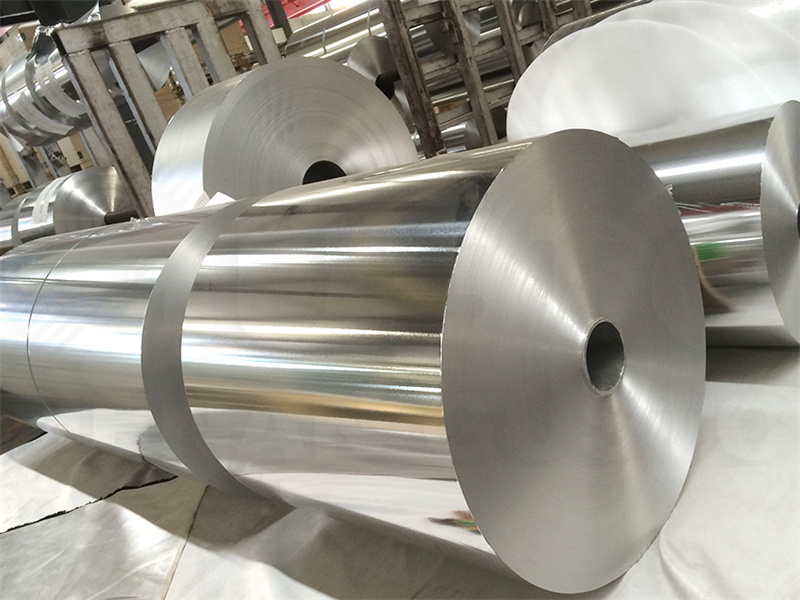
Printable aluminum foil is a thin-gauge metallic substrate specifically manufactured to accept inks, coatings, and surface treatments used in gravure, flexographic, digital, and hot foil stamping processes. It serves as the foundation material for a wide range of packaging, labeling, and decorative printing applications worldwide.
When buyers search for an aluminum foil printer solution, the foil substrate itself is half the equation. Print quality, ink adhesion, registration accuracy, and downstream lamination performance all depend heavily on the foil material — not just the printing machine. Choosing the wrong foil grade leads to ink peeling, pinholing, wrinkling on the press, and costly production waste.
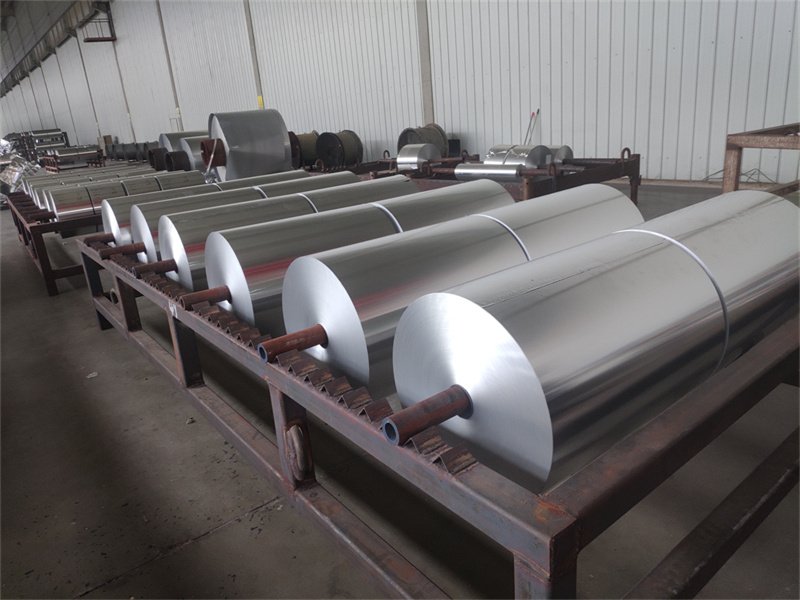
We are a professional aluminum foil manufacturer supplying print-ready foil rolls to packaging converters, label printers, and flexible packaging producers across more than 60 countries. Our foil is engineered to run cleanly through gravure presses, flexographic lines, hot foil printing machines, and digital foil printer systems — with consistent surface quality roll to roll.
What Is Foil Printing?
Foil printing — also called foil stamping or metallic foil printing — is a process that applies decorative or functional metallic effects to a substrate surface. The term covers several distinct technologies, each placing different demands on the foil material itself.
Hot Foil Printing (Hot Stamping)
A hot foil printer uses a heated die to press a metallic foil carrier against the substrate. Heat and pressure transfer the foil layer permanently onto the surface, creating the premium metallic look used for gold foil printing on luxury packaging, cosmetic labels, and book covers. The aluminum foil used as the base layer in hot foil carrier systems must have a smooth, defect-free surface finish to ensure clean release and sharp edge definition.
Gravure & Flexographic Printing Directly on Foil
The most common industrial aluminium foil printing process involves printing directly onto an aluminum foil roll using gravure or flexographic presses. Ink is applied to the foil surface, dried in a heated tunnel, and the printed foil roll is then laminated, slit, and converted into finished packaging. This process requires foil with controlled surface roughness (Ra value), consistent thickness tolerance, and strong ink-adhesion characteristics after corona treatment.
Digital Foil Printing
A digital foil printer applies UV adhesive in variable patterns and laminates metallic foil in a second pass. For this application, the aluminum foil used as the decorative layer must have a mirror-smooth surface and uniform metallization for precise foil transfer. Our mirror-finish and bright-annealed foil grades are well suited for these applications.
Cold Foil & Lamination
Cold foil processes bond metallic foil to a printed substrate using pressure-sensitive adhesive without heat. The foil material requires excellent flatness and consistent caliper to laminate uniformly at high press speeds without delamination or air bubbles.
How to Print on Aluminum Foil: Process Overview
Understanding the full aluminium foil printing process helps converters specify the right foil grade from the start. Below is a step-by-step overview of direct printing on aluminum foil — the core process for food, pharma, and flexible packaging production.
Step 1 — Foil Selection & Incoming Inspection
Select the correct alloy, temper, and thickness for your application. For food packaging, 8011-O and 1235-O are the standard choices. For pharmaceutical blister lidding, 8021-O soft temper is commonly specified. Inspect incoming foil for surface defects, width tolerance, and flatness before putting rolls on press.
Step 2 — Surface Treatment (Corona or Chemical Priming)
Aluminum foil has a naturally non-porous, low-surface-energy metallic surface. Corona treatment raises the surface energy to 38–44 mN/m, allowing water-based and UV inks to wet and bond properly. Some applications use a chemical primer coat instead. Our foil is available pre-treated on request, saving converters this step on press.
Step 3 — Printing (Gravure, Flexo, or Digital)
The treated foil feeds through the printing press under controlled tension. Each color station applies ink in sequence. Consistent foil thickness tolerance (±3% or better) is essential here — thickness variation causes tension fluctuation and registration errors between color stations, especially on high-speed gravure lines running at 200+ m/min.
Step 4 — Drying and Ink Curing
Solvent-based inks are dried in heated air tunnels between print stations. Water-based inks require longer drying zones. UV inks cure instantly under UV lamps with no heat — preferred for thinner foil gauges that are heat-sensitive. Our foil is tested for dimensional stability across the full range of drying temperatures.
Step 5 — Lamination (if required)
Printed foil is typically laminated with a PE, CPP, or PET film layer to add heat-seal properties, barrier performance, or structural strength. Lamination adhesion depends on foil surface cleanliness and the absence of oil residue — our foil is produced under strict oil-weight control (typically 3–7 mg/m²) to ensure reliable lamination bond strength.
Step 6 — Slitting, Rewinding & QC
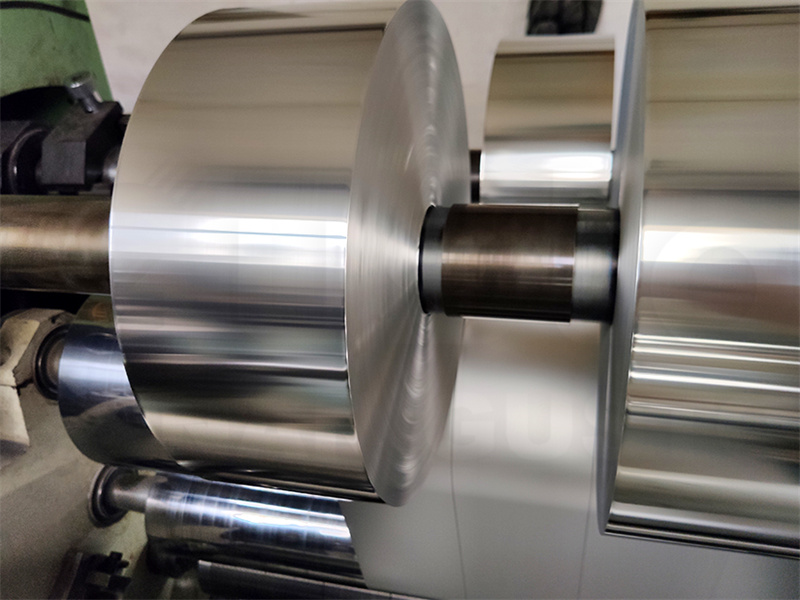
Final printed and laminated foil is slit to finished roll width, rewound to specified core diameter, and inspected for defects, splices, and roll geometry before dispatch.
Can you print on aluminum foil with a home printer? Consumer inkjet and laser printers are not designed for metallic foil substrates. Printer foil paper — a pre-metallized paper product sold for desktop printing — is a different material entirely. Industrial printing on aluminum foil requires purpose-built press equipment and properly specified foil material, as described above.
Our Printable Aluminum Foil Grades
We supply aluminum foil in multiple alloys and tempers, each matched to specific printing processes and end-use requirements. The table below summarizes our main printable foil product lines.
| Grade | Alloy / Temper | Thickness Range | Best For |
|---|---|---|---|
| Food Packaging Foil | 8011-O / 1235-O | 9 µm – 25 µm | Gravure & flexo printing; chocolate, snack, butter wrapping |
| Pharmaceutical Lidding Foil | 8021-O / 8079-O | 20 µm – 45 µm | Blister pack lidding; variable data printing on press |
| Heavy-Gauge Packaging Foil | 3003-H18 / 8011-H22 | 50 µm – 200 µm | Laminated pouches; retort packaging; industrial wrapping |
| Label-Grade Foil | 1060-O / 1100-O | 12 µm – 30 µm | Aluminum foil label printing; narrow-web flexo & digital |
| Mirror / Bright Foil | 1235-O (bright-annealed) | 9 µm – 20 µm | Hot foil stamping carrier; gold foil printing base; decorative lamination |
| Colored / Pre-Coated Foil | 8011 with lacquer coat | 12 µm – 40 µm | Cosmetics, beverage caps; reduces printing stations needed on press |
| Cable & Technical Foil | 1235-H19 / 8021-H18 | 6 µm – 150 µm | Technical marking; industrial identification labels |
Full Specifications & Parameters
All foil products are manufactured and tested to the following standard specifications. Custom tolerances are available on request for high-precision applications.
| Parameter | Standard Specification | Notes |
|---|---|---|
| Alloy | 1050, 1060, 1100, 1235, 3003, 8011, 8021, 8079 | Most common printing grades in bold: 8011, 1235, 8021 |
| Temper | O (soft), H14, H16, H18, H19, H22 | O temper standard for food & pharma printing applications |
| Thickness Range | 6 µm – 200 µm | Tolerance: ±3% (standard); ±1.5% (precision grade) |
| Width Range | 100 mm – 1,650 mm | Slit to customer-specified widths; tolerance ±1 mm |
| Roll OD (Outer Diameter) | Up to 800 mm | Custom OD on request; core ID: 76 mm / 152 mm standard |
| Roll Weight | Up to 2,000 kg | Jumbo rolls available for high-speed gravure lines |
| Surface Finish | Bright one-side (1/1S), bright both sides (2/2S), matte | Bright-annealed mirror finish available on select grades |
| Surface Roughness (Ra) | 0.10 – 0.35 µm | Controlled for consistent ink lay-down on press |
| Surface Energy (after corona) | 38 – 44 mN/m | Pre-treated foil available; tested per ASTM D2578 |
| Oil Weight (lubricant) | 3 – 7 mg/m² | Food-grade oil standard; zero-oil available for pharma |
| Pinhole Rating | <1 pinhole/m² (food grade) | Tested per EN 546 / ASTM B479; ultra-low pinhole on request |
| Tensile Strength | 65 – 185 MPa (by alloy/temper) | Full mechanical property test report supplied per coil |
| Elongation | 1% – 30% (by temper) | O temper: high elongation; H18/H19: low elongation |
| Wettability (Dyne level) | ≥ 36 dyne (untreated) | Corona-treated: ≥ 40 dyne, tested at time of shipment |
| Food Safety Compliance | GB 4806.11 / FDA 21 CFR / EU Reg. 1935/2004 | Full food contact certification documentation available |
| Certifications | ISO 9001, ISO 22000, SGS, BRC | Test reports and COA supplied with each shipment |
| Printing Method | Recommended Alloy | Thickness | Key Foil Requirement |
|---|---|---|---|
| Gravure (high-speed) | 8011-O / 1235-O | 9 – 20 µm | Tight thickness tolerance ±3%; consistent flatness; low pinhole count |
| Flexographic | 8011-O / 1100-O | 12 – 40 µm | Good elongation; corona-treated surface; low oil residue |
| Hot Foil Stamping | 1235-O (bright) | 9 – 20 µm | Mirror-bright surface; uniform metallization; clean release coating compatibility |
| Digital Foil Printing | 1235-O (bright-annealed) | 9 – 15 µm | Smooth, defect-free surface; consistent gloss level roll-to-roll |
| Aluminum Foil Label Printing | 1060-O / 1100-O | 12 – 30 µm | Narrow-width slit precision; die-cuttable; good flatness on narrow-web press |
| Pharmaceutical Blister Lidding | 8021-O / 8079-O | 20 – 45 µm | Zero-oil surface; ultra-low pinhole; compliant with pharmacopoeia standards |
Applications by Industry
Food Packaging
Chocolate wrappers, butter foil, snack pouches, condiment sachets, yogurt lidding. Gravure and flexo printed with food-safe inks. 8011-O and 1235-O are the standard grades.
Pharmaceutical Blister Packs
Lidding foil for tablet and capsule blisters. Requires ultra-low pinhole count, zero-oil surface, and compatibility with variable data printing for lot numbers and expiry dates.
Cosmetics & Beauty Labels
Metallic labels, eyeshadow palette printing, bottle neck labels, and sealing foil. Often printed using digital foil printers or narrow-web flexo for short runs with premium finish.
Beverage & Spirits Caps
Wine capsule foil, bottle cap printing, neck label foiling. Gold foil printing on capsules is a core use case — requires bright-surface foil with consistent metallization.
Gift & Luxury Packaging
Decorative box linings, hot-foil stamped gift wraps, high-end shopping bag printing. Hot foil printing machine compatibility requires mirror-finish base foil from our 1235 bright grade range.
Industrial & Technical Labels
Battery wrap, capacitor foil marking, cable identification, and durable equipment labels. Requires chemical-resistant ink compatibility and high-temper foil for stiffness.
Compatible Printing Methods
Our aluminum foil is tested and qualified for use with all major industrial printing technologies. The following overview helps converters match foil grade to process.
Gravure Printing on Aluminum Foil
The dominant process for high-volume food and pharma foil packaging. Gravure presses run at 150–300 m/min and require foil with extremely consistent thickness tolerance — our precision-grade foil holds ±3% or better across the full roll width. Jumbo rolls up to 2,000 kg minimize splice frequency on high-speed lines.
Flexographic Printing on Aluminum Foil
Flexo is the preferred process for mid-volume converters printing multi-color designs on aluminum foil packaging. Our 8011-O and 1100-O grades with corona-treated surfaces deliver excellent ink adhesion for both solvent and water-based flexo inks.
Hot Foil Printing (Stamping)
In hot foil printing, our bright-annealed 1235-O foil serves as the metallic carrier layer that is stamped from a die onto the target substrate. The mirror surface finish and uniform metallization of our bright foil grades produce sharp, clean foil transfer — critical for premium gold foil printing on labels and packaging.
Digital Foil Printing
Digital foil processes demand the highest surface consistency. Our bright 1235-O foil, produced with tightly controlled Ra values below 0.15 µm, delivers the uniform reflectivity and clean surface that digital foil printer systems require for reliable UV adhesive bonding and foil transfer.
Aluminum Foil Label Printing
Narrow-web aluminum foil label printer systems require foil slit to precise widths with burr-free edges to run cleanly through the press without damaging the printing plate or causing web breaks. Our label-grade foil is slit on precision slitting equipment and inspected for edge quality before shipment.
How to Choose the Right Foil Grade for Printing
The right printable aluminum foil grade depends on five key factors. Getting these right before placing an order prevents press problems and costly material waste.
1. Printing Process and Press Speed
Gravure at high speed demands the tightest thickness tolerance. Flexo at moderate speed is more forgiving. Digital foil processes prioritize surface gloss. Tell us your press type and running speed and we will recommend the matching foil grade and tolerance class.
2. End-Use Regulatory Requirements
Food contact packaging requires foil compliant with FDA 21 CFR, EU Regulation 1935/2004, or China GB 4806.11 — depending on your target market. Pharmaceutical blister lidding must meet pharmacopoeia and regional drug authority requirements. We supply full certification documentation with every shipment.
3. Thickness and Gauge
Thinner foil (6–15 µm) is used for flexible wrapping and lamination base layers. Medium gauge (20–50 µm) suits blister lidding and structured pouches. Heavy gauge (50–200 µm) is for semi-rigid containers and industrial applications. Match gauge to your converting equipment’s minimum tension and die-cut capability.
4. Surface Finish Requirement
Bright (mirror) finish is required for hot foil stamping carrier applications and gold foil printing. Standard mill-finish suits gravure and flexo direct printing. Matte finish is available for anti-glare label applications. Pre-lacquered or colored foil reduces the number of printing stations needed on press.
5. Roll Format and Core Size
Match roll outer diameter, core inner diameter, and roll weight to your press unwind specifications. We supply foil on 76 mm and 152 mm cores as standard, with roll OD up to 800 mm and jumbo rolls to 2,000 kg for gravure lines. Custom roll formats are available with no minimum premium on orders above our standard MOQ.
Why Source Printable Aluminum Foil from Us
We are a dedicated aluminum foil manufacturer — not a trader. Every roll of foil we ship is produced in our own plant, tested in our own laboratory, and backed by our own quality team. Here is what that means for your production.
Consistent Roll-to-Roll Quality
Print registration, ink adhesion, and lamination bond strength all depend on foil consistency. Our process controls hold thickness tolerance at ±3% standard and ±1.5% on precision orders — confirmed by 100% thickness scanning on the production line.
Full Certification Documentation
Every shipment comes with a Mill Test Certificate (MTC), Certificate of Analysis (COA), and food safety compliance declaration. ISO 9001 and ISO 22000 certified. SGS third-party testing available on request.
Custom Slit Widths & Roll Formats
We slit to your exact press width with ±1 mm tolerance and burr-free edges. Core size, roll OD, and roll weight are all configurable to match your unwind equipment without adapters or re-reeling.
Printing Compatibility Testing
Before first shipment, we conduct ink adhesion tests and surface energy measurements on production samples. You receive test data — not just a product data sheet — so your press team can validate before committing to a full production run.
Stable Supply with Flexible MOQ
We maintain buffer stock of standard foil grades for fast-turn orders. MOQ starts from 2 MT per specification. Long-term supply agreements with fixed pricing windows are available for converters with predictable monthly requirements.
Technical Support from Foil Specialists
Our application engineers understand printing processes — not just metallurgy. When you have a press problem related to foil, we troubleshoot with you, not just send a replacement roll. That knowledge saves production time and reduces material waste.
Export Countries & Logistics
We export printable aluminum foil to packaging converters, label manufacturers, and flexible packaging producers in over 60 countries. Our standard export packaging — moisture-resistant inner wrapping, wooden pallet or steel coil cradle, export-grade outer crating — is designed to protect roll geometry and surface quality through long ocean freight transits.
United StatesGermanyBrazilMexicoTurkeySaudi ArabiaUAESouth AfricaIndonesiaVietnamThailandPolandItalyAustraliaCanadaFranceEgyptNigeriaMalaysiaArgentina
Standard lead time for stocked grades is 15–25 days from order confirmation. Custom specifications — non-standard thickness, special surface treatment, or precision-slit narrow widths — typically require 30–45 days. We work with major freight forwarders and can book FCL or LCL shipments from Shanghai, Tianjin, and Guangzhou ports. DDP delivery to your warehouse door is available for most destinations.
For customers with recurring monthly requirements, we offer scheduled shipment programs with fixed pricing windows, eliminating the need to requote on every order and protecting your production cost structure from short-term LME price swings.
Frequently Asked Questions
What aluminum foil alloy is best for gravure printing in food packaging?
8011-O and 1235-O are the most widely used alloys for gravure printing on food packaging foil. Both offer good elongation in the soft temper, low pinhole counts, and consistent surface quality that allows clean ink lay-down at high press speeds. 8011 has slightly higher strength and is the default choice for most food converters. 1235-O is preferred when higher purity is required, such as for pharmaceutical-adjacent applications.
What is the aluminium foil printing process for blister pack lidding?
Pharmaceutical blister lidding foil is typically printed using gravure or flexographic presses with compliant pharma-grade inks, then heat-seal lacquered on the reverse side. The foil must have an ultra-low pinhole count, zero-oil surface (or food-grade oil below 2 mg/m²), and comply with pharmacopoeia standards for the target market. Our 8021-O and 8079-O grades are specifically qualified for this application and come with full pharmaceutical compliance documentation.
How to print on aluminum foil without ink adhesion problems?
Ink adhesion problems on aluminum foil typically come from three sources: insufficient surface energy, too much residual lubricant oil on the foil surface, or incompatible ink chemistry. To solve this, use corona-treated foil with a surface energy of at least 38 mN/m; specify low-oil or zero-oil foil (under 5 mg/m²) from your supplier; and confirm your ink system is qualified for metallic substrates with your ink manufacturer. We supply pre-corona-treated foil and provide surface energy test data with each shipment to eliminate guesswork on press.
What foil do I need for a hot foil printing machine (gold foil printing)?
Hot foil stamping uses a metallic foil carrier — a thin aluminum or polyester base film coated with a release layer, color layer (typically gold pigment), and adhesive layer. The aluminum foil component in this carrier system is typically 1235-O bright-annealed foil in 9–12 µm thickness. The mirror surface finish is essential for achieving the high-gloss metallic appearance that defines quality gold foil printing. We supply bright-annealed 1235-O in the specifications used by major foil carrier manufacturers worldwide.
What is the difference between printer foil paper and printable aluminum foil?
Printer foil paper is a consumer craft product — standard paper with a thin metallic film applied to its surface, designed to feed through desktop printers for decorative use. Printable aluminum foil is a pure or alloy metallic substrate produced in industrial roll form for professional packaging and label printing. The two products serve completely different markets and have no overlap in specification or application.
Can you supply aluminum foil label printer-compatible narrow-slit rolls?
Yes. We slit foil to widths from 100 mm upward for narrow-web label press applications. Slit width tolerance is ±1 mm with burr-free edges to prevent web breaks and plate damage on narrow-web presses. We supply on 76 mm cores as standard for narrow-web label presses, with roll OD specified to match your unwind reel size. Minimum order for narrow-slit label-grade foil starts from 2 MT per specification.
Do you provide samples before a full order?
Yes. We provide lab samples (small sheets for ink adhesion and surface testing) at no charge for qualified buyers. For press trials, we can supply a short trial roll — typically 50–100 kg — at standard pricing with no MOQ surcharge, so your press team can validate the material on your actual equipment before committing to a production quantity order.
Request a Sample or Quotation
Tell us your alloy, temper, thickness, width, printing process, and end-use application — we will respond with a material recommendation and firm quotation within 24 hours.Contact Us Now →