
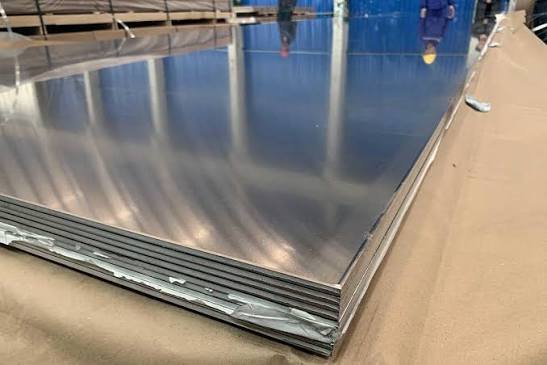
Aluminium sheets polished are among the most sought-after aluminum products in construction, interior design, automotive, and industrial sectors. Their bright, reflective surface combines visual appeal with outstanding durability and corrosion resistance.
This guide covers everything buyers need to know — from what polished aluminum means, to finish types, standard sizes, applications, pricing, and maintenance tips. Whether you are sourcing a mirror polished aluminium sheet for a luxury interior project or need standard polished aluminum sheet 4×8 for industrial use, this article has the answers.

What Does “Polished Aluminum” Mean?
Many buyers ask: what does “polished aluminum” mean?
Polished aluminum refers to aluminum sheet or plate that has undergone a mechanical, chemical, or electrochemical surface treatment to create a smooth, reflective finish. The process removes surface imperfections, scratches, and oxidation, leaving behind a clean, bright, and attractive surface.
The level of polish can vary greatly:
- Low polish — slightly smoother than mill finish, dull sheen
- Satin / brushed polish — fine linear texture, moderate reflectivity
- High polish / mirror polish — fully reflective, near-mirror appearance
In the aluminum industry, polished aluminium sheets are classified by their reflectivity percentage and surface roughness (Ra value). A true mirror polished aluminium sheet achieves reflectivity of 85–95% and a surface roughness of Ra ≤ 0.05 μm.
Key point: Polished aluminum is not the same as anodized or coated aluminum. Polishing is a physical surface treatment. Anodizing can be applied after polishing to protect the finish.
How to Tell If Aluminum Is Polished
A common question from buyers is: how to tell if aluminum is polished?
Here are simple ways to identify polished aluminum:
Visual Check
- Mirror polished: You can see a clear reflection of yourself or objects in the surface. The reflection is sharp and distinct.
- Brushed polished: Fine parallel lines run across the surface. The sheet has a satin sheen but does not show a clear reflected image.
- Mill finish (not polished): The surface looks dull, slightly grainy, with no visible reflection.
Touch Test
Polished aluminum feels very smooth to the touch. Mill finish aluminum feels slightly rougher and less uniform.
Reflectivity Test
Hold a light source near the surface. Polished aluminum reflects light clearly and brightly. Non-polished aluminum scatters light in all directions with a dull appearance.
Surface Roughness (Ra Value)
For technical buyers, surface roughness measurement confirms the polish level:
| Finish | Ra Value | Appearance |
|---|---|---|
| Mill finish | Ra 0.4–1.6 μm | Dull, no reflection |
| Brushed finish | Ra 0.2–0.8 μm | Satin, directional sheen |
| Standard polish | Ra 0.1–0.2 μm | Bright, partial reflection |
| Mirror polish | Ra ≤ 0.05 μm | Full mirror reflection |
What Is Mirror Polished Aluminium Sheet?
Mirror polished aluminium sheet is the highest grade of polished aluminum. It has a reflective surface that closely resembles a glass mirror.
How It Is Made
The production process involves multiple stages:
- Surface preparation — remove oil, dirt, and oxidation
- Rough grinding — use 80–120 grit to remove deep scratches and surface defects
- Medium polishing — use 240–400 grit to smooth the surface further
- Fine polishing — use 800–1200 grit to approach mirror smoothness
- Buffing — use polishing compound and buffing wheel to achieve mirror shine
- Protection — apply anodizing or polished aluminum sealer to preserve the finish
Reflectivity of Mirror Polished Aluminum
| Material | Reflectivity |
|---|---|
| Silver mirror | 99% |
| Glass mirror | 95–98% |
| Mirror polished aluminum | 85–95% |
| Brushed aluminum | 50–70% |
| Standard aluminum sheet | 30–50% |
Mirror polished aluminum delivers near-mirror reflectivity at a fraction of the weight and cost of glass mirrors. This makes it ideal for large-scale decorative and functional reflective applications.
Polished Aluminum Finish Types: Full Comparison
Choosing the right polished aluminum finish is critical for your project. Here is a complete overview:
1. Mirror Polish Finish
- Reflectivity: 85–95%
- Surface: Perfectly smooth, no visible texture
- Best for: Decorative panels, light reflectors, luxury interiors, elevator cabs
2. Brushed / Satin Finish
- Reflectivity: 50–70%
- Surface: Fine parallel lines, uniform texture
- Best for: Architectural cladding, kitchen appliances, furniture
3. Anodized Polished Finish
- Reflectivity: 75–88%
- Surface: Smooth with hard protective anodic layer
- Best for: Outdoor architecture, high-traffic areas, long-term durability
4. Electrochemical Brightened Finish
- Reflectivity: Up to 90%
- Surface: Chemically treated for even higher reflectivity than mechanical polish alone
- Best for: Precision reflectors, solar concentrators, lighting equipment
5. Mill Finish (Base — Not Polished)
- Reflectivity: 30–50%
- Surface: Smooth from rolling, no polishing
- Best for: Industrial base material, further processing
Aluminum Finishes Chart
Use this aluminum finishes chart to quickly compare all common aluminum surface finishes:
| Finish Type | Reflectivity | Surface Texture | Durability | Cost Level | Best Application |
|---|---|---|---|---|---|
| Mirror Polish | 85–95% | Ultra smooth | Medium | High | Decorative, reflectors |
| Brushed / Satin | 50–70% | Linear texture | Good | Medium | Architecture, appliances |
| Anodized (Clear) | 75–88% | Smooth, hard | Excellent | Medium-High | Outdoor, commercial |
| Electrochemical Bright | Up to 90% | Very smooth | Good | High | Precision reflectors |
| Color Anodized | Varies | Smooth, colored | Excellent | Medium-High | Decorative, signage |
| PVDF Coated | Low | Smooth or textured | Excellent | Medium | Building cladding |
| Mill Finish | 30–50% | Slightly rough | Basic | Low | Industrial use |
| Embossed | Very low | Patterned | Good | Low-Medium | Anti-slip, flooring |
This aluminum finishes chart helps you match the right surface treatment to your specific project requirements.
Will Aluminum Stay Polished?
This is one of the most common questions from buyers: will aluminum stay polished?
The honest answer is: it depends on the environment and whether you protect it.
Why Polished Aluminum Can Lose Its Shine
Aluminum naturally reacts with oxygen in the air to form aluminum oxide. This oxide layer is actually what gives aluminum its natural corrosion resistance. However, on a polished surface, this oxidation appears as a dull, cloudy film that reduces reflectivity.
Factors that cause polished aluminum to lose its shine:
- Exposure to moisture and humidity — accelerates oxidation
- UV exposure — breaks down the polished surface over time
- Atmospheric pollutants — acids and chemicals in urban air attack the surface
- Physical contact — fingerprints, scratches, and abrasion dull the finish
- Cleaning with wrong products — harsh chemicals or abrasive cleaners damage the surface
How Long Does Polished Aluminum Stay Shiny?
| Condition | Expected Lifespan of Polish |
|---|---|
| Unprotected, indoor use | 6–18 months before dulling |
| Unprotected, outdoor use | 2–6 months before dulling |
| With wax or lacquer sealer | 2–5 years indoors |
| With anodizing | 10–20+ years indoors or outdoors |
How to Keep Polished Aluminum Shiny
The best way to keep aluminium sheets polished looking bright is to:
- Apply a polished aluminum sealer immediately after polishing
- Re-apply sealer or wax every 6–12 months
- Clean regularly with mild soap and water
- Avoid harsh chemicals and abrasive cleaning tools
- For permanent outdoor use, choose anodized polished aluminium sheets
What Is Polished Aluminum Sealer?
Polished aluminum sealer is a clear protective coating applied to the surface of polished aluminum to prevent oxidation, tarnishing, and surface damage.
Without a sealer, polished aluminum will oxidize and lose its shine relatively quickly. A good sealer creates a barrier between the aluminum surface and the environment.
Types of Polished Aluminum Sealer
| Sealer Type | Protection Level | Durability | Application Method | Best For |
|---|---|---|---|---|
| Clear lacquer spray | Medium | 1–3 years | Spray can | DIY, small panels |
| Aluminum-specific wax | Low-Medium | 6–12 months | Cloth application | Interior decorative |
| Ceramic coating | High | 3–7 years | Professional spray | Automotive, marine |
| Clear powder coat | Very High | 5–15 years | Professional baking | Architectural |
| Anodizing | Highest | 10–25+ years | Industrial process | Commercial, outdoor |
How to Apply Polished Aluminum Sealer
Follow these steps for best results:
- Clean the surface — remove all fingerprints, oil, and dust with a degreaser
- Dry completely — moisture under the sealer causes bubbling and poor adhesion
- Apply first coat — spray or wipe on a thin, even layer
- Allow to cure — follow the product’s drying time (usually 15–30 minutes for spray lacquer)
- Apply second coat — for better protection, apply 2–3 thin coats
- Final buff — after full curing, lightly buff with a soft microfiber cloth
How to Make Aluminum Look Shiny
Many buyers and fabricators want to know: how to make aluminum look shiny?
Here is a complete step-by-step polishing guide:
Tools and Materials Needed
- Angle grinder or orbital polishing machine
- Sandpaper: 120, 240, 400, 800, 1200, 2000 grit
- Polishing compound (coarse and fine grades)
- Buffing wheel or polishing pads
- Clean microfiber cloths
- Degreaser or aluminum cleaner
- Polished aluminum sealer (for final protection)
Step-by-Step Process
Step 1: Clean the Aluminum Surface
Remove all grease, oil, paint, and dirt. Use a dedicated aluminum degreaser. Dry the surface completely before starting.
Step 2: Start with 120–240 Grit Sandpaper
Sand in one consistent direction. Remove all scratches, pits, and corrosion. This step takes the most time but is the most important.
Step 3: Progress to 400–800 Grit
Continue sanding in the same direction. The surface will become noticeably smoother and more uniform.
Step 4: Move to 1200–2000 Grit
At this stage, the surface should feel very smooth. The finish will look dull but consistent. All previous sanding marks must be completely removed before moving on.
Step 5: Apply Coarse Polishing Compound
Attach a buffing wheel to your angle grinder or polishing machine. Apply coarse polishing compound. Work in overlapping circular motions. The surface will begin to shine.
Step 6: Apply Fine Polishing Compound
Switch to a clean buffing pad and apply fine polishing compound. Continue in circular motions. The reflectivity will increase dramatically at this stage.
Step 7: Final Buffing
Use a clean, dry microfiber cloth or clean buffing pad. Buff the surface to its final mirror shine. Apply light, even pressure.
Step 8: Apply Polished Aluminum Sealer
Immediately apply a polished aluminum sealer to protect your work. This is essential for maintaining the shine long-term.
Pro Tips for Better Results
- Never skip sanding grits. Each grit removes marks from the previous one. Skipping causes deep scratches that polishing cannot fix.
- Keep the surface cool. Heat from polishing can warp thin sheets. Work in short bursts.
- Use aluminum-specific products. Steel polishing compounds can contaminate aluminum and cause corrosion spots.
- Work in one direction first. Random circular sanding leaves cross-scratches that are difficult to remove.
- Protect the surface immediately after polishing. Bare polished aluminum oxidizes fast.
Polished Aluminum Sheet 4×8: Sizes and Specifications
The most popular standard size for polished aluminium sheets is the polished aluminum sheet 4×8 — meaning 4 feet × 8 feet (1,219 mm × 2,438 mm).
Standard Sheet Sizes
| Size (ft) | Metric Dimensions | Common Use |
|---|---|---|
| 4 × 8 | 1,219 × 2,438 mm | Most popular, general use |
| 4 × 10 | 1,219 × 3,048 mm | Longer panels, cladding |
| 5 × 10 | 1,524 × 3,048 mm | Large architectural panels |
| Custom | Any dimension | Specific project requirements |
Thickness Options
| Thickness | Common Application |
|---|---|
| 0.5 – 1.0 mm | Decorative panels, signage |
| 1.0 – 2.0 mm | Interior cladding, elevator panels |
| 2.0 – 3.0 mm | Architectural feature walls |
| 3.0 – 6.0 mm | Structural decorative panels |
Best Alloys for Polished Aluminium Sheets
| Alloy | Purity | Polish Quality | Recommended For |
|---|---|---|---|
| 1050 | 99.5% Al | ★★★★★ Best | Mirror finish, reflectors |
| 1060 | 99.6% Al | ★★★★★ Best | Mirror finish, solar reflectors |
| 1100 | 99% Al | ★★★★☆ Very Good | General decorative use |
| 5005 | Al-Mg | ★★★★☆ Very Good | Anodized architectural panels |
| 3003 | Al-Mn | ★★★☆☆ Good | HVAC, food equipment |
| 5052 | Al-Mg | ★★★☆☆ Good | Marine, industrial applications |
For the best mirror finish result, always choose 1050 or 1060 alloy. Their high aluminum purity means fewer alloying particles to interrupt the polishing process.
Aluminium Flooring Sheet: A Special Application
Aluminium flooring sheet is a specific type of aluminum sheet used for flooring, walkways, ramps, and platforms. While not always polished to a mirror finish, flooring sheets often have a patterned or brushed surface for both appearance and safety.
Types of Aluminium Flooring Sheet
| Type | Surface | Slip Resistance | Best For |
|---|---|---|---|
| Checkered / Tread plate | Diamond or bar pattern | High | Industrial floors, ramps, vehicle flooring |
| Brushed satin | Fine linear texture | Medium | Commercial flooring, walkways |
| Anodized flat | Smooth, hard anodized | Medium | Clean room flooring, commercial interiors |
| Perforated | Holes pattern | Medium-High | Drainage flooring, ventilation platforms |
Common Specifications for Aluminium Flooring Sheet
- Alloy: 3003, 5052, 5754 (for strength and durability)
- Thickness: 2.0 mm – 6.0 mm
- Width: Up to 2,000 mm
- Length: Standard 2,000–6,000 mm or custom cut
- Surface: Checkered pattern or brushed finish
Aluminium flooring sheet is preferred over steel in many applications because it is lighter, will not rust, and requires less maintenance.
Aluminium Metal Sheets: Types and Uses
Aluminium metal sheets is a broad category that covers all flat aluminum products. Here is a clear overview for buyers new to aluminum sheet products:
Main Categories of Aluminium Metal Sheets
By Thickness:
- Foil: Less than 0.2 mm — packaging, insulation
- Thin sheet: 0.2–6.0 mm — decorative, architectural, industrial
- Plate: 6.0 mm and above — structural, machining, aerospace
By Surface Finish:
- Polished (mirror, brushed, satin)
- Mill finish
- Anodized
- Color coated / PVDF coated
- Embossed / checkered
By Alloy Series:
| Series | Main Element | Key Properties | Common Use |
|---|---|---|---|
| 1000 | Pure Al | Best polish, soft | Reflectors, chemical equipment |
| 3000 | Mn | Moderate strength, good corrosion | HVAC, food containers |
| 5000 | Mg | High strength, marine grade | Shipbuilding, automotive |
| 6000 | Mg + Si | Heat treatable, structural | Construction, aerospace |
Understanding the full range of aluminium metal sheets helps you select the best product for each application.
Applications of Polished Aluminium Sheets
Aluminium sheets polished serve a wide range of industries:
Architecture and Interior Design
- Elevator cab interiors and doors
- Lobby feature walls
- Column covers and ceiling panels
- Retail store interiors
- Hotel and hospitality design
Lighting and Solar Energy
- LED and fluorescent light reflectors
- Parabolic solar concentrators
- Solar thermal panel backing
- Stage and studio lighting equipment
Automotive and Transportation
- Custom vehicle interior trim
- Truck cab and trailer panels
- Motorcycle decorative parts
- Racing car bodywork
Food Processing and Catering
- Commercial kitchen surfaces
- Food display counters
- Catering trolleys and service equipment
- Cold storage panel interiors
Signage and Display
- Premium retail signage
- Exhibition display panels
- Luxury brand display fixtures
- Decorative nameplates
Marine Applications
- Boat interior trim and panels
- Marine instrument housings
- Decorative fittings and hardware
Why Source Polished Aluminium Sheets from Us?
As a professional aluminium sheets polished manufacturer and exporter, we offer:
🏭 Factory Direct Pricing
We manufacture polished aluminium sheets in our own facility. You buy directly from the source with no middleman markup.
📐 Flexible Specifications
We supply:
- Thickness: 0.3 mm to 6.0 mm
- Width: up to 2,650 mm
- Standard sizes including polished aluminum sheet 4×8
- Custom cut-to-size on request
✅ Multiple Finish Options
- Mirror polished (up to 95% reflectivity)
- Brushed / satin finish
- Anodized polished finish
- Electrochemical brightened finish
🔬 Full Quality Control
Every sheet undergoes:
- Surface reflectivity measurement
- Thickness and flatness inspection
- Chemical composition testing
- Visual surface defect inspection
Material test reports provided with every shipment.
🌍 Global Export Experience
We export to:
- United States and Canada
- United Kingdom and Europe
- Australia and New Zealand
- Middle East and Gulf countries
- Southeast Asia
- Over 60 countries worldwide
📦 Surface-Safe Packaging
Polished surfaces require careful packaging. We use:
- Double-sided PE protective film
- Interleaving paper between sheets
- Wooden crates for sea freight
- Edge and corner protectors
Frequently Asked Questions
Q1: Will aluminum stay polished?
Polished aluminum will stay bright if properly protected. Without sealing, bare polished aluminum oxidizes and dulls within weeks to months depending on the environment. Apply a polished aluminum sealer or anodizing to maintain the finish for years.
Q2: What does “polished aluminum” mean?
Polished aluminum means aluminum that has been mechanically or chemically processed to create a smooth, reflective surface. The polish level ranges from satin/brushed to full mirror finish with up to 95% reflectivity.
Q3: How to make aluminum look shiny?
To make aluminum look shiny, sand progressively through grits (120 → 240 → 400 → 800 → 1200 → 2000), then buff with polishing compound using a buffing wheel. Finish with a fine polishing compound and apply a polished aluminum sealer to protect the shine.
Q4: How to tell if aluminum is polished?
You can tell if aluminum is polished by looking at the surface reflection. Mirror polished aluminum shows a clear, sharp reflected image. Brushed polished has a directional satin sheen. Mill finish aluminum looks dull with no visible reflection.
Q5: What is the best size for polished aluminium sheets?
The most popular standard size is polished aluminum sheet 4×8 (4ft × 8ft / 1,219 × 2,438 mm). This size works for most architectural, decorative, and industrial applications.
Q6: What alloy is best for mirror polished aluminium sheet?
1050 or 1060 alloy gives the best mirror polish results due to their high aluminum purity (99.5%+). For anodized polished applications requiring more strength, 5005 alloy is recommended.
Q7: How long does polished aluminum sealer last?
- Wax-based sealers: 6–12 months
- Clear lacquer: 1–3 years
- Ceramic coating: 3–7 years
- Anodizing: 10–25+ years
Re-apply sealer as needed based on environmental conditions and visible dulling of the surface.